


To understand the history of Guatemala through flavor, look closely at its sweet table. Traditional Guatemalan desserts weave together two distinct culinary worlds: native Mesoamerican ingredients—such as ripe plantains, cacao, sweet highland corn, squash, and roasted pumpkin seeds—and the sugar, dairy, egg-yolk, and warm spice traditions introduced to colonial convents in Antigua Guatemala during the 16th and 17th centuries.
For travelers visiting Antigua, exploring Guatemalan traditional sweets takes two forms: warm, home-cooked desserts served fresh from the stove after a family meal, and miniature artisanal confections (dulces típicos) crafted from copper kettles following centuries-old conventual recipes. Below is an authentic guide to the essential desserts and sweets every food lover should try—including which dishes you can learn to prepare hands-on at Casa San Miguel.
Warm Home-Cooked & Ceremonial Guatemalan Desserts
1. Rellenitos de Plátano (Sweet Plantains Stuffed with Spiced Black Beans)
If there is one warm dessert beloved in every region of the country, it is Rellenitos de Plátano. At first glance, first-time visitors are often surprised to hear that its sweet filling is made from black beans—yet one bite explains why it is an icon of authentic Guatemalan desserts.
- Ingredients & Preparation: Fully ripe, black-skinned plantains (plátanos maduros) are boiled with cinnamon sticks until tender and mashed into a smooth, naturally sweet dough. Inside goes a thick paste of pureed black beans fried with sugar, ground cinnamon, and sometimes a touch of grated chocolate. The oval croquettes are fried until golden brown and dusted with granulated sugar.
- Flavor & Texture: Crisp caramelized exterior, creamy sweet plantain layer, and a rich, velvety center that tastes remarkably like spiced chestnut or chocolate fudge.
- Where to Try & Cook It: Served year-round at afternoon coffee tables, street stalls outside La Merced church, and taught hands-on from scratch in our Casa San Miguel cooking classes.
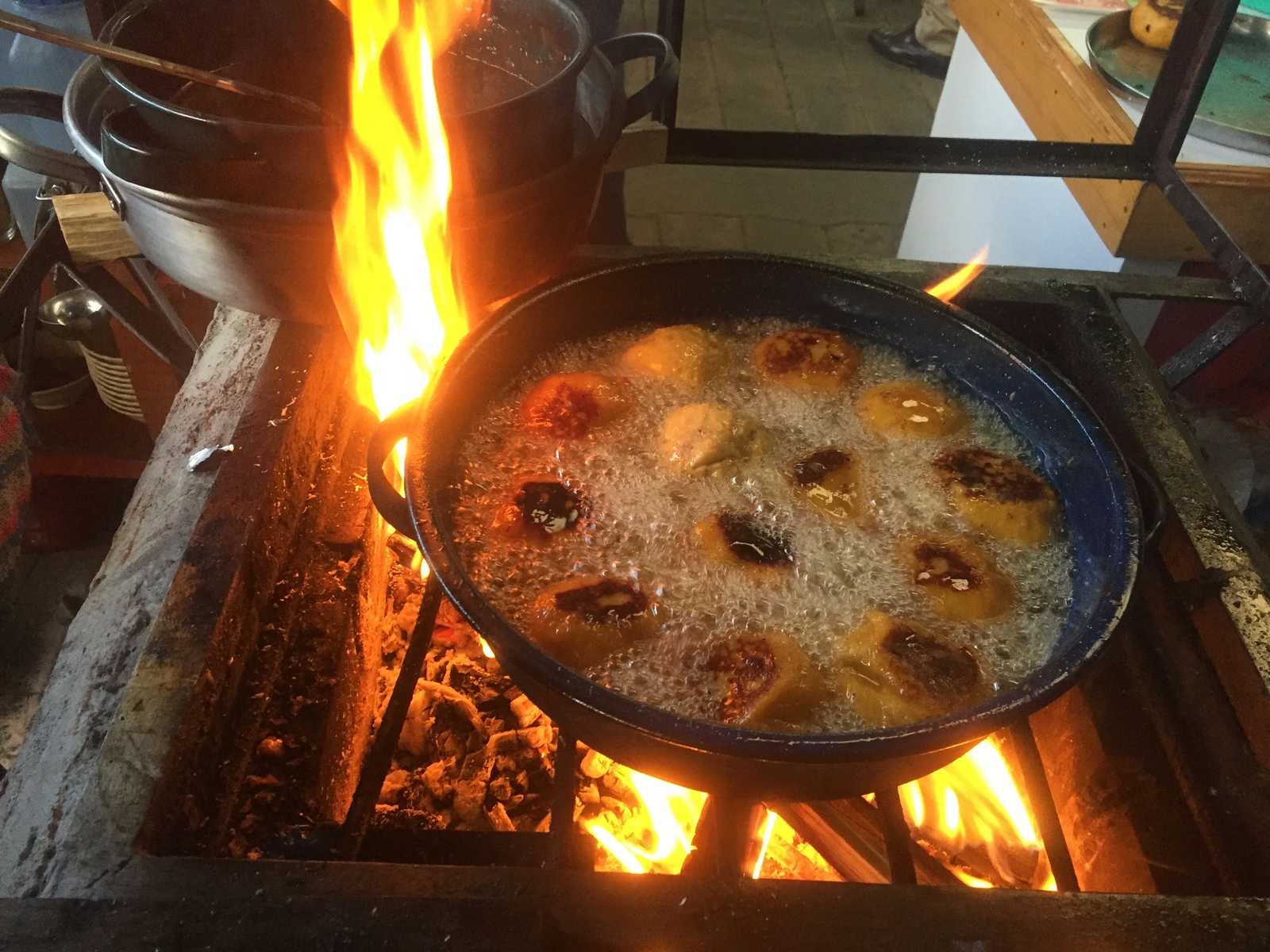
Golden-brown Rellenitos de Plátano dusted with sugar, one of the most beloved traditional Guatemalan desserts.
2. Plátanos en Mole (Ripe Plantains in Ceremonial Chocolate-Chili Sauce)
Declared Intangible Cultural Heritage of the Nation by Guatemala’s Ministry of Culture and Sports in 2007 (Acuerdo Ministerial 801-2007), Plátanos en Mole is a masterpiece of Maya-Hispanic culinary fusion. Unlike savory Mexican moles served over poultry, Guatemalan mole is specifically crafted as a rich, complex dessert.
- Ingredients & Preparation: Slices of sweet ripe plantain are fried golden and simmered gently in a dark velvety sauce made from roasted tomatoes, dried pasa and mulato chilies (seeded so the heat remains whisper-mild), toasted pumpkin seeds (pepitoria), sesame seeds (ajonjolí), cinnamon, and artisanal Guatemalan dark drinking chocolate, garnished with toasted sesame seeds.
- Flavor & Texture: Deeply aromatic dark cacao balanced by sweet caramelized plantain, warm cinnamon, and smoky roasted seeds.
- Where to Try & Cook It: Served on special occasions and Sunday lunches across the highlands, and featured among the traditional recipes guests prepare at Casa San Miguel.
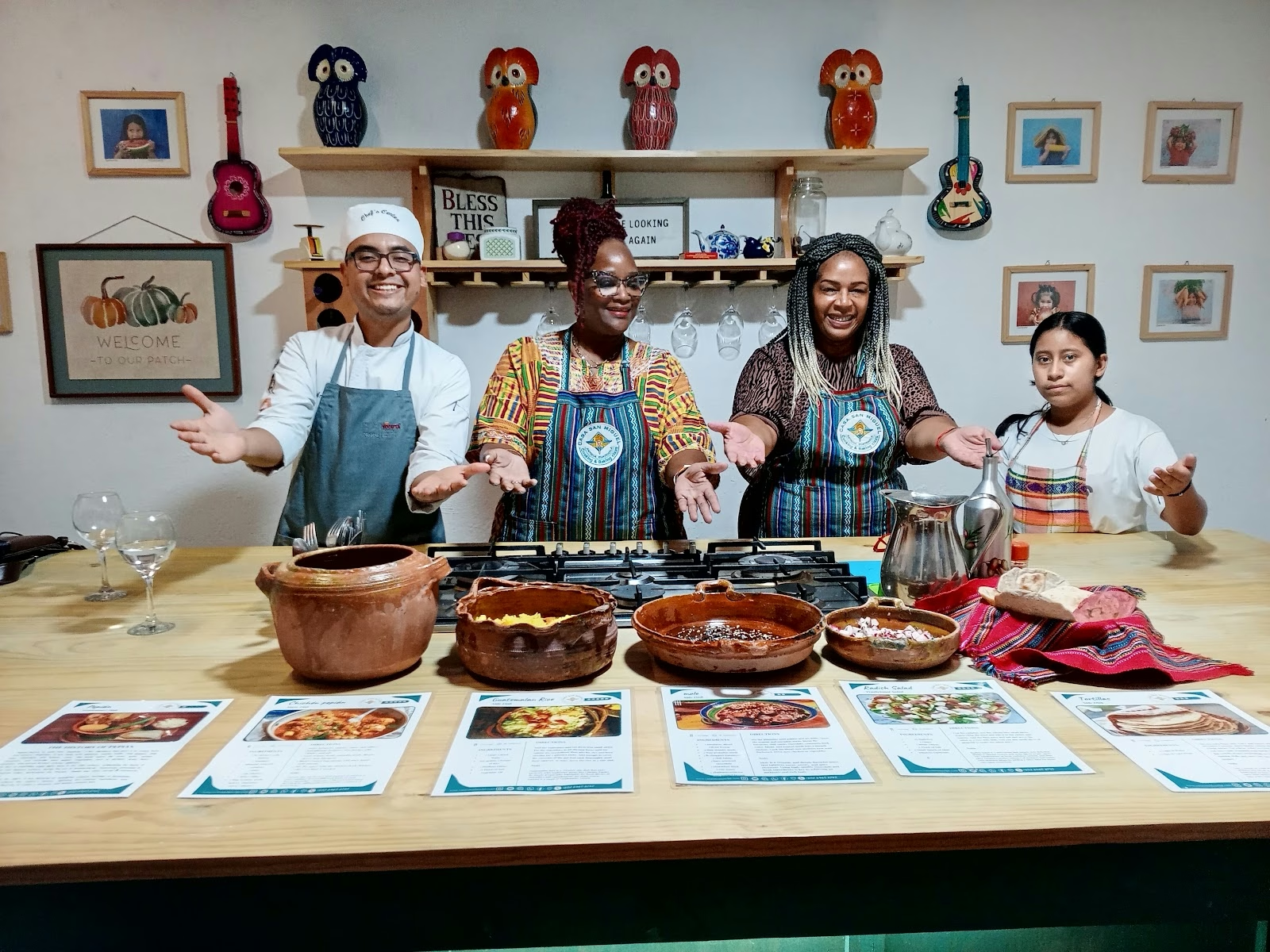
Chef Carlos and international guests at Casa San Miguel presenting a freshly cooked clay casserole of Plátanos en Mole topped with toasted sesame seeds alongside printed recipe cards.
3. Tamalitos de Elote (Sweet Tender Corn Tamales)
Unlike savory nixtamalized dough tamales wrapped in plantain leaves, Tamalitos de Elote are made from freshly shucked sweet tender corn kernels (elote tierno) ground with butter or cream, sugar, and cinnamon, then steamed inside their own green corn husks (doblador).
- Flavor & Texture: Moist, spoon-tender, and fragrant with sweet steamed corn; traditionally served warm with a dollop of cultured sour cream (crema pura) and salty white cheese (queso seco) alongside afternoon coffee.
- Where to Try & Cook It: Afternoon markets when fresh highland corn is in harvest, and as part of our traditional menu options at Casa San Miguel.
4. Buñuelos Guatemaltecos (Crisp Citrus-Anise Syrup Fritters)
Buñuelos are light, airy choux-style dough puffs prepared with wheat flour, eggs, and a hint of anise or orange blossom, fried until crisp and puffy, and served swimming in a warm, fragrant light syrup (miel blanca) infused with cinnamon sticks, whole cloves, allspice berries, and citrus peel.
- Occasions & Where to Find Them: Especially iconic during the cool evenings of November and December (around the Feast of the Immaculate Conception and Christmas) at open-air food stalls outside La Merced church and Parque Central in Antigua.
5. Torrejas en Miel (Custard-Stuffed Sweet Bread in Spiced Syrup)
A direct descendant of Spanish torrijas adapted to the Guatemalan pantry, Torrejas are made with rich egg bread (pan dulce de yema or molletes) sliced open and stuffed with a thick milk custard (manjar de leche), raisins, and cinnamon. Each loaf is dipped in whipped egg whites, fried golden, and simmered in spiced raw cane sugar (panela) or white sugar syrup. They are the signature dessert of Lent, Semana Santa (Holy Week), and Christmas Eve.
6. Ayote en Miel (Candied Squash Simmered with Raw Cane Sugar & Spices)
Prepared every autumn for November 1st (Día de Todos los Santos) alongside the ceremonial salad Fiambre, Ayote en Miel uses thick wedges of native hard-shelled green squash (ayote) arranged in a heavy pot with unrefined dark cane sugar cones (rapadura de panela), cinnamon sticks, cloves, allspice (pimienta gorda), and fresh ginger. As it slow-cooks for hours, the panela melts into a glossy, dark molasses glaze that infuses the tender squash and its seeds.
7. Bocado de la Reina (Colonial Spiced Bread Pudding)
Literally translating to «The Queen’s Mouthful,» Bocado de la Reina originated in colonial kitchens as a sophisticated way to transform day-old artisanal French or sweet bread into a festive baked pudding enriched with milk, eggs, butter, vanilla, cinnamon, raisins, almonds, and a splash of sweet wine or aged Guatemalan rum.
Antigua’s Conventual Candy Tradition (Dulces Típicos de Convento)
During the 16th and 17th centuries, cloistered nuns in the convents of Santiago de los Caballeros de Guatemala (modern-day Antigua)—such as Nuestra Señora de la Concepción and Santa Catalina—combined sugarcane cultivated on the southern slopes with native fruits, nuts, and seeds to craft small candies sold to support their convents. Today, you can taste these typical desserts of Guatemala in traditional sweet shops (dulcerías) around the Municipal Market and Calle del Arco:
- 8. Canillitas de Leche: The ultimate symbol of Antigua’s sweet shops—slender, pale-ivory sticks of caramelized milk, sugar, and cinnamon boiled slowly in copper cauldrons and pulled by hand until they achieve a crumbly, melt-in-the-mouth fudge texture.
- 9. Colochos de Guayaba: Fragrant pink guava pulp cooked down into a dense paste with sugar and cinnamon, rolled into pinwheel spirals (colochos), and dusted in sugar crystals.
- 10. Mazapán de Pepitoria & Bolitas de Tamarindo: Instead of European almonds alone, Guatemalan convent confectioners created rich marzipan loaves from toasted pumpkin seeds (pepitoria) and rice, alongside sweet-and-tart sugar-rolled tamarind spheres (bolitas de tamarindo) and candied figs (higos en miel).
Quick Guide: Which Guatemalan Desserts to Try & Where
| Dessert | Key Ingredients | Flavor & Texture | How to Experience in Antigua |
|---|---|---|---|
| Rellenitos de Plátano | Ripe plantains, sweetened black beans, cinnamon | Crisp exterior, creamy & velvety spiced center | Cook hands-on at Casa San Miguel or try at La Merced street stalls |
| Plátanos en Mole | Ripe plantains, dark cacao, mild dried chilies, pepitoria, sesame | Velvety dark chocolate & warm roasted spice | Cook hands-on at Casa San Miguel (traditional menu options) |
| Tamalitos de Elote | Fresh sweet corn kernels, butter, cinnamon, corn husks | Warm, tender, sweet steamed corn cake | Cook hands-on at Casa San Miguel or local afternoon markets |
| Buñuelos & Torrejas | Egg dough / sweet bread, panela or white spice syrup | Light & syrup-soaked with warm clove and cinnamon | Evening plaza stalls & seasonal fiestas (Semana Santa / Nov–Dec) |
| Canillitas de Leche & Colochos | Milk, sugar, cinnamon / fresh guava paste | Melt-in-mouth milk fudge & chewy fruit spirals | Traditional dulcerías near the Municipal Market & Calle del Arco |
Learn to Cook Traditional Guatemalan Desserts at Casa San Miguel
Inspired by our founder’s father—who ran an artisanal bakery in Zacapa, Guatemala—Casa San Miguel Cooking & Baking Class celebrates both savory and sweet Guatemalan culinary traditions. While convent candies like Canillitas de Leche are best purchased from specialized dulcerías in town, our hands-on cooking classes teach you how to prepare authentic home-cooked Guatemalan desserts—such as Rellenitos de Plátano, Plátanos en Mole, and Tamalitos de Elote—alongside traditional appetizers, tortillas, and main stews.
Cook a Full Guatemalan Meal (Including Dessert!) in Antigua
Every cooking class at Casa San Miguel includes a traditional dessert course, fresh Guatemalan coffee, natural fruit drinks, round-trip local transportation, and printed recipe cards so you can recreate your favorite dishes at home.
View Class Options ($40–$70 USD) Reserve Your Class via WhatsApp
From traditional desserts to a hands-on Guatemalan food experience
Guatemalan desserts make more sense when you see them alongside the country’s broader food traditions. Our guide to traditional Guatemalan food explains how native ingredients, colonial techniques and family recipes come together across the table.
If you want to go beyond reading recipes, explore hands-on cooking classes in Guatemala or add a visit to the Antigua Guatemala market to discover seasonal fruit, cacao and local ingredients before cooking. Check the current menu and availability before booking.

Join the discussion 4 Comments