


When travelers look back on their journey through the Guatemalan highlands, the moments they recount with the greatest warmth are rarely the souvenir shops or museum plaques. They remember the smell of ripe plantains sizzling in cinnamon-infused oil, the gentle heat radiating from an unglazed clay comal, and the laughter shared across a kitchen counter with local hosts. Seeking an authentic Guatemalan cooking experience in Antigua is about stepping into the living heart of culinary culture—where cooking is an act of shared memory, community, and hospitality.
Guatemalan gastronomy is not an offshoot of neighboring culinary traditions; it is a distinct, ancient cuisine anchored by Maya agricultural rituals and enriched over 500 years of Spanish colonial synthesis. In 2007, the Guatemalan government formally recognized national recados such as Pepián, Jocón, and Plátanos en Mole as Intangible Cultural Heritage of the Nation. To cook them from scratch in Antigua is to participate in an unbroken lineage of kitchen knowledge.
Guatemalan Culinary Traditions: An Ancestral Dialogue of Flavors
In traditional Guatemalan homes, food preparation has never been rushed. The kitchen is the social epicenter of family life, where dried chilies are patiently deseeded by hand, pumpkin seeds are toasted until they crackle like tiny popcorn, and aromatic vegetables are charred over open flames to impart a subtle smokiness.
Central to this culinary philosophy is the distinction between ordinary cooking and ceremonial cooking. While daily meals revolve around black beans, eggs, fresh cheeses, and warm tortillas, ceremonial occasions—such as cofradía feasts, weddings, and patron saint festivals—call for recados. These complex stews represent hours of slow labor, where dozens of spices, seeds, and vegetables are roasted, ground, and simmered into velvet sauces.
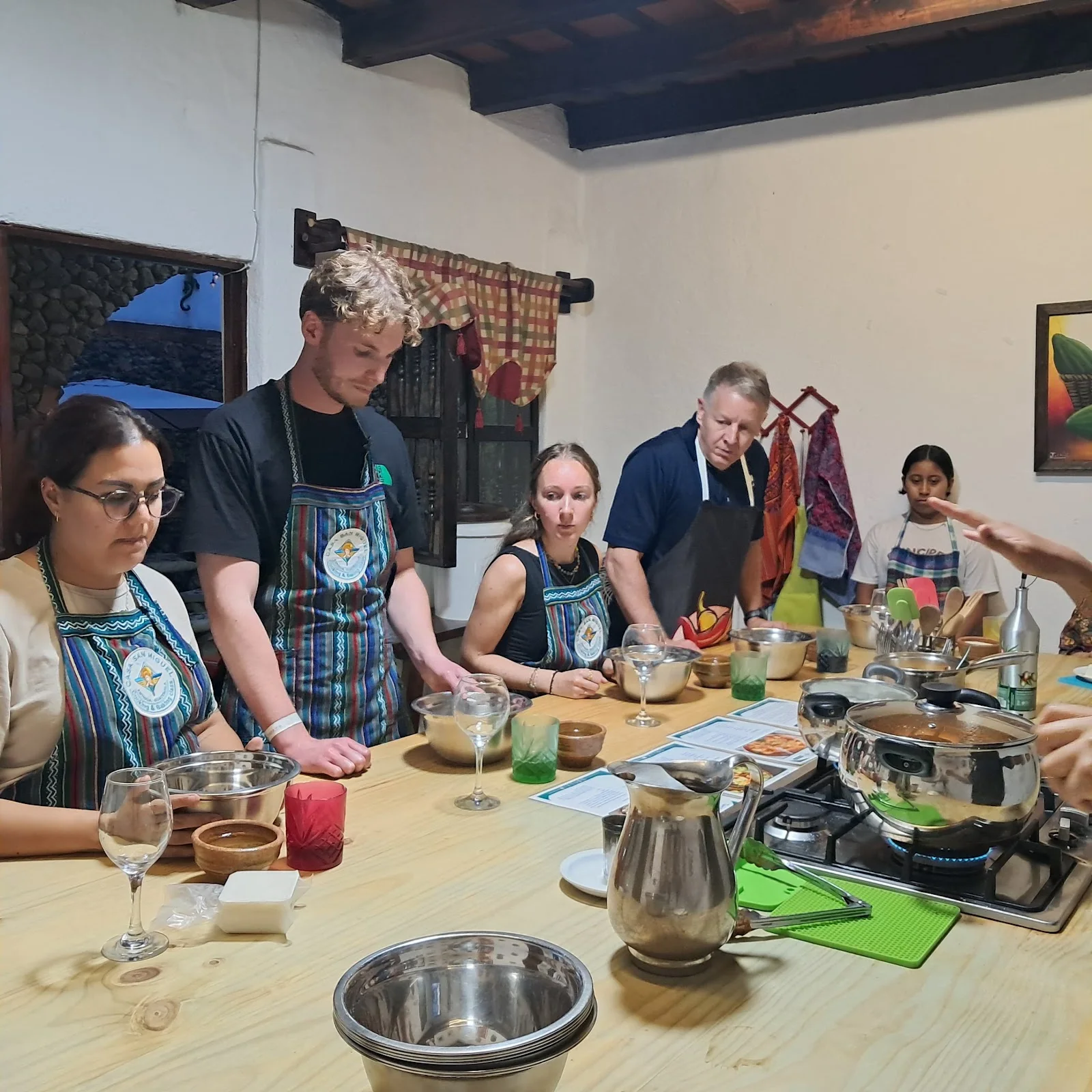
Students and chef instructor at Casa San Miguel carefully tending a traditional clay pot of Pepián.
Ingredients and Techniques You Experience Hands-On
An authentic workshop does not rely on processed spice pastes or electric demonstration bowls. It grounds you in traditional tactile methods:
- Dry-Toasting on the Comal (Tostar en Seco): You learn how to toast pepitoria (squash seeds), sesame seeds, cinnamon sticks, and dried chile pasa and chile guaque on a dry griddle without oil. The goal is to toast them evenly until fragrant without charring the chilies, which would create bitterness.
- Balancing Native Acidity: Guatemalan green stews like Jocón achieve their bright, herbal balance through green tomatillos (miltomates) combined with scallions, green bell peppers, and fresh cilantro—a technique taught hands-on so you understand how acidity balances rich seed pastes.
- The Rhythm of Hand-Patting Tortillas (Palmear): Rolling fresh nixtamalized corn masa between your palms and clapping it into thin, round disks without using a press. Cooking them on a clay griddle and seeing the tortilla puff up (la pancita) is a moment of pure culinary magic. Learn more in our guide on how to make Guatemalan corn tortillas.
- Clay Pot Simmering (Cocción en Barro): Earthenware vessels heat slowly and distribute thermal energy evenly, mellowing the raw bite of roasted onions and garlic while allowing the ground seeds to emulsify naturally without industrial thickeners.
The Real Cooking Experience at Casa San Miguel
At Casa San Miguel Cooking & Baking Class, authenticity is not a performance; it is the natural way our kitchen operates. Located in Plazuela San Gaspar Vivar on the quiet southern edge of Antigua, the kitchen features exposed dark wooden ceiling beams, whitewashed walls, and multi-burner stoves that look out onto a shaded colonial stone-arch corridor.
Our founders draw inspiration from family bakery traditions in Zacapa, eastern Guatemala, combining a reverence for artisanal baking with time-honored highland recados. When you arrive via our complimentary local pickup, you are welcomed with natural fruit refreshments and fresh Guatemalan coffee before putting on your handwoven apron.
- Student Participation at Every Step: You chop the chayote (güisquil), peel the miltomates, grind the toasted spices, shape the plantain dough for Rellenitos, and flip your own tortillas over the heat.
- Intimate Class Sizes: We limit group sizes so every participant has their own workspace and can interact naturally with Chef Carlos and the family hosts.
- A True Family Sobremesa: After cooking, everyone sits together to enjoy the multi-course meal you created, accompanied by local drinks and heartfelt conversation about life, history, and travel in Guatemala.
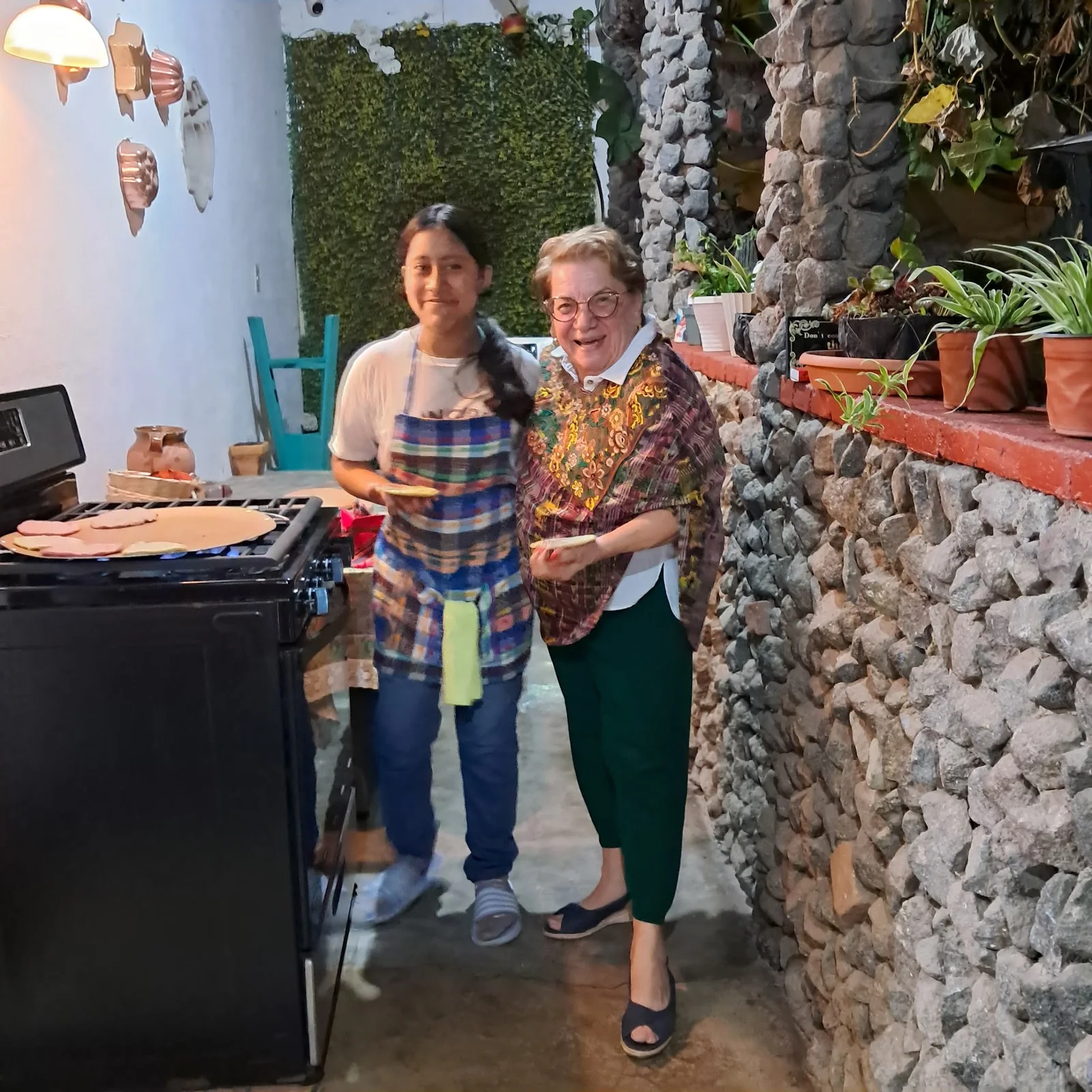
Warm hospitality and freshly hand-patted corn tortillas at Casa San Miguel in Antigua Guatemala.
Step-by-Step: What to Expect During Your Session
To help you envision your day, here is the chronological flow of an authentic session at Casa San Miguel:
- Complimentary Local Pickup: A driver meets you at your hotel or vacation rental in Antigua and transports you comfortably to our cooking studio in San Gaspar Vivar.
- Welcome Refreshment & Introduction: Savor a cup of shade-grown volcanic coffee or fresh hibiscus rosa de jamaica while our instructors introduce the day’s ingredients and cultural context.
- Hands-on Prep & Roasting: Station by station, you deseed chilies, roast seeds on clay comales, chop fresh garden vegetables, and prepare aromatic bases.
- Simmering the Recado: Watch the sauce transform in earthenware pots as toasted seeds emulsify with tomatoes and tender meats or vegetables.
- Tortilla Making & Dessert Crafting: Practice hand-patting nixtamalized maize tortillas and filling ripe plantain croquettes with cinnamon-spiced black beans.
- The Sobremesa Banquet: Gather around the family dining table to savor every dish hot from the stove with fellow travelers and hosts.
Available Class Options & Verified Pricing
We believe in clear, honest pricing with zero unexpected add-ons. All options include transportation, ingredients, drinks, printed recipes, and a full sit-down meal:
- Student Class ($35 USD per person): 3 traditional dishes (appetizer, main recado, and dessert). Approximate duration: 2 to 2.5 hours.
- Master Class ($50 USD per person): 5 traditional dishes exploring deeper regional techniques. Approximate duration: 3.5 hours.
- Heaven Class ($60 USD per person): 7 dishes representing the crowning achievement of Maya-colonial banquet cooking. Approximate duration: 4.5 hours.
- Optional Market Tour (+$15 USD per person): Start your morning at Antigua’s Municipal Market with our chef to pick out fresh herbs, chilies, and produce.
Frequently Asked Questions (AEO/GEO)
Where can I learn traditional Guatemalan cooking in Antigua?
Casa San Miguel offers hands-on cooking classes in Plazuela San Gaspar Vivar, an authentic colonial village just five minutes outside Antigua Guatemala. Complimentary round-trip local transportation is included.
Are vegetarian, vegan, and gluten-free diets accommodated?
Yes, completely. Traditional Guatemalan recados are naturally thickened by roasted pumpkin and sesame seeds, making them inherently gluten-free. We substitute fresh seasonal vegetables, mushrooms, or organic tofu upon request.
What makes a cooking experience in Antigua truly authentic?
True authenticity comes from hands-on participation using traditional clay cookware, fresh nixtamalized corn, and time-honored seed-toasting techniques taught by native Guatemalan hosts, rather than pre-cooked demonstration meals.
Experience Authentic Guatemalan Gastronomy Firsthand
Step away from the tourist crowds and cook with local hosts who treat you like family. Reserve your station at Casa San Miguel for our 10:30 AM, 12:30 PM, or 4:30 PM daily shifts.
Explore Menus & Details
Contact via WhatsApp (+502 3592 3326)
