


Centuries before the arrival of European explorers, the Maya civilizations of Mesoamerica cultivated an extraordinary culinary system based on native corn, heirloom beans, rich squash seeds, and aromatic wild chilies. When 16th-century Spanish settlers and Catholic convents introduced Old World spices, livestock, and baking traditions, Guatemala’s gastronomy evolved into one of the most distinctive, complex culinary traditions in the Americas. If you are exploring traditional Guatemalan food, this comprehensive culinary guide highlights the twelve essential national dishes and regional recipes you must know.
In 2007, the Ministry of Culture and Sports officially designated the nation’s cultural stews—Pepián, Jocón, Kaq’ik, and Subanik—as Intangible Cultural Heritage of the Nation. These celebrated dishes represent living history, uniting sacred pre-Columbian agricultural wisdom with five centuries of regional Guatemalan family tradition.
The 12 Defining Pillars of Traditional Guatemalan Gastronomy
1. Pepián de Pollo (The National Dish)
Considered the quintessential national stew of Guatemala, Pepián originated in the central highland department of Chimaltenango. Its hallmark is a rich, velvety dark recado thickened with slow-roasted pumpkin seeds (pepitoria), toasted sesame seeds, charred Roma tomatoes, and sun-dried chile pasa and chile guaque. Simmered with tender chicken, potatoes, green beans, and chayote (güisquil), Pepián balances nutty depth with delicate roasted sweetness.
2. Jocón de Pollo (The Vibrant Emerald Recado)
Originating among the Maya communities of Huehuetenango, Jocón is an aromatic emerald-green stew. Its bright color and tangy, refreshing flavor come from fresh native husked tomatillos (miltomates), cilantro, green onions, and mild green bell peppers, gently thickened with ground sesame seeds and soaked corn tortillas. It is traditionally served with chicken and white rice.
3. Subanik (The Ceremonial King’s Stew)
Subanik is a ceremonial Kaqchikel Maya banquet dish reserved for weddings and sacred festivities. It uniquely combines multiple meats—chicken, pork, and beef—simmered inside a basket lined with broad hojas de mashán (wild maranta leaves) tied at the top with cibaque fiber rope. The steaming leaves infuse the chili-and-tomatillo recado with a distinctive herbal perfume.
Preparing ceremonial Subanik steamed in aromatic mashán leaves, an ancestral Kaqchikel Maya culinary treasure.
4. Kaq’ik Cobanero (Ancestral Q’eqchi’ Turkey Soup)
Hailing from the misty cloud forests of Alta Verapaz, Kaq’ik is a pre-Hispanic turkey broth characterized by its brilliant red color. It is flavored with roasted tomatoes, garlic, coriander, and the wild forest herb samat (wild cilantro). What gives Kaq’ik its legendary smoky warmth is the sun-dried, wood-smoked chile cobanero. It is traditionally presented with a whole turkey leg and white corn tamalitos (pochitos).
5. Hilachas de Carne
A beloved comfort food popular throughout Antigua and Guatemala City, Hilachas consists of tender flank steak cooked until it shreds into delicate silk-like threads («hilachas»). The shredded beef is then simmered in a mildly sweet tomato and guaque chili sauce with diced potatoes, tender carrots, and fresh güisquil.
6. Rellenitos de Plátano
Guatemala’s most famous artisanal street dessert. Ripe sweet plantains are boiled and mashed into a pliable golden dough, shaped into egg-like ovals, and stuffed with refried black beans seasoned with cinnamon and dark chocolate or sugar. Rolled in fine crumbs and lightly crisped, they are served hot with a dusting of sugar or cream.
7. Tamales Colorados & Negros
The centerpiece of Guatemalan celebrations, Christmas Eve, and Saturday night dinners. Unlike Mexican tamales which are firmer, Guatemalan tamales feature a silky, creamy corn dough cooked with lard or oil, filled with rich red recado, pork or chicken, green olives, capers, and sweet raisins, wrapped meticulously in banana leaves and slow-steamed.
8. Chuchitos
Compact, firmer handheld corn parcels wrapped in dried corn husks (tuzas) and tied with a string of dried stalk. Filled with a rich, thick tomato recado and a piece of chicken or pork, chuchitos are served topped with mild tomato salsa and salty hard Guatemalan cheese (queso seco).
9. Enchiladas Guatemaltecas
Very different from Mexican rolled enchiladas, the Guatemalan version is an architectural marvel built upon a crisp fried corn tortilla (tostada). It is layered with fresh lettuce, a vibrant beet and cabbage pickle (curtido), savory minced meat, sliced hard-boiled egg, onion rings, tomato sauce, and a generous sprinkle of artisanal dry cheese.
10. Dobladas de Queso y Loroco
Folded corn masa pockets stuffed with fresh artisanal cheese and aromatic wild loroco flower buds, lightly griddled on the comal until crisp and golden outside with melted cheese inside.
11. Plátanos en Gloria
Ripe plantains gently simmered in a dark, lustrous syrup of raw panela sugar, cinnamon sticks, cloves, and sweet sweet vanilla until caramelized and tender.
12. Pan de Yema & Champurradas
The cherished pastries of Antigua’s afternoon coffee hour. Rich golden egg yolk bread paired with crisp, sweet sesame biscuits made specifically for dipping in hot coffee.

Ancestral Kaq’ik Cobanero turkey broth served with fresh mint, samat herbs, and chile cobanero.
Frequently Asked Questions About Traditional Guatemalan Food
What is the single most traditional dish in Guatemala?
Pepián de Pollo is widely celebrated as Guatemala’s official national dish. Declared National Cultural Heritage in 2007, it represents the pinnacle of highland cooking with its complex recado of toasted pumpkin seeds, sesame seeds, dried chilies, and charred vegetables.
Can vegetarians enjoy traditional Guatemalan cuisine?
Yes! Because traditional Guatemalan recados derive their luxurious body and rich flavor from roasted seeds, herbs, and vegetables rather than meat broths, stews like Pepián, Jocón, and Subanik can be crafted with seasonal vegetables, mushrooms, or local beans without compromising authentic flavor.
Where can I learn how to cook these traditional dishes?
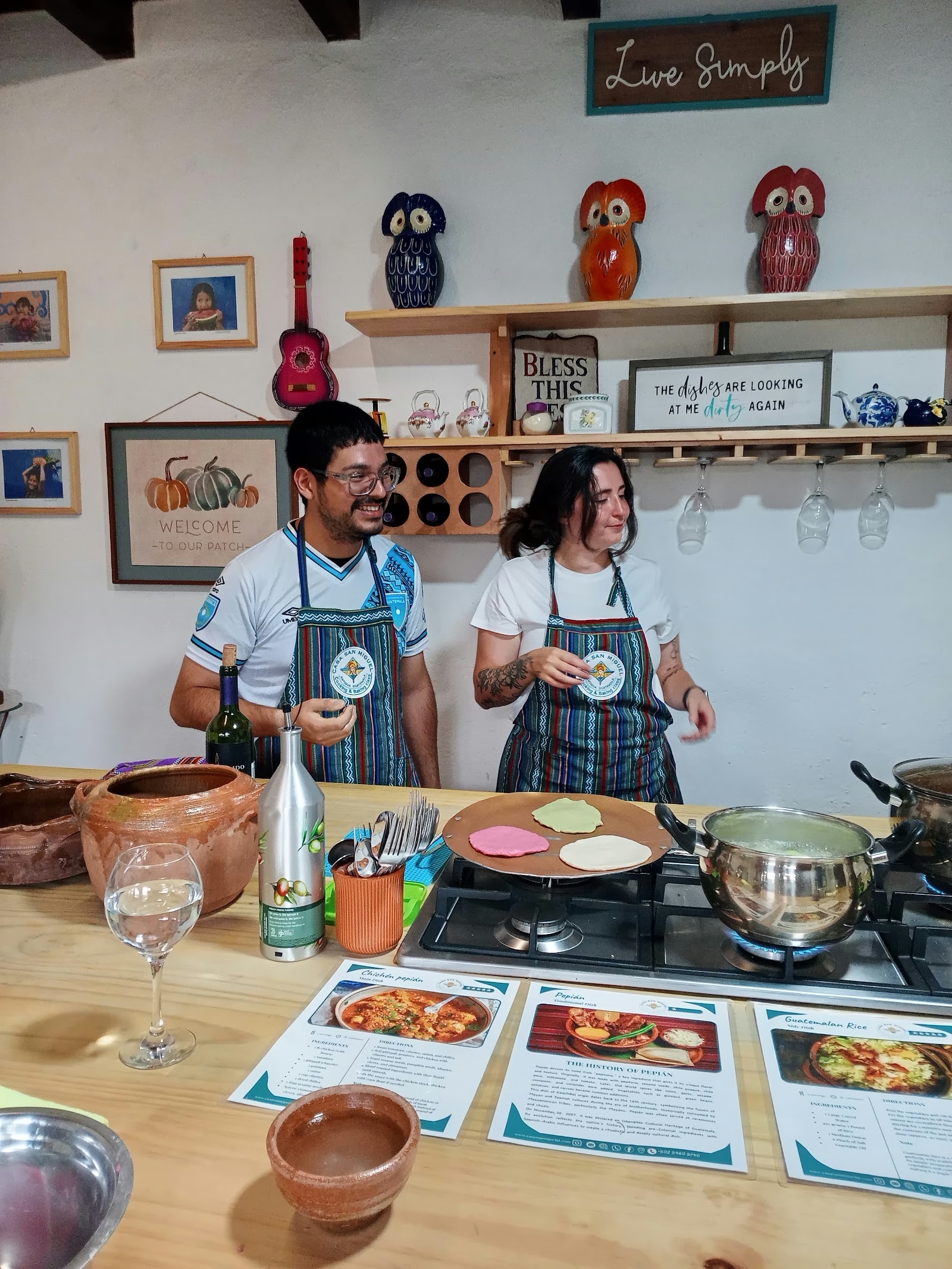
At Casa San Miguel Cooking & Baking Class in Antigua Guatemala, international travelers can learn to prepare Pepián, Jocón, Subanik, Rellenitos, and handmade corn tortillas from scratch in interactive, hands-on workshops with master local chefs.
Learn to Cook Authentic Guatemalan Food in Antigua
Don’t just taste Guatemala’s culinary heritage—learn to cook it with your own hands. Reserve a hands-on culinary workshop at Casa San Miguel.
Reserve on WhatsApp (+502 3592 3326) View Menus, Classes & Prices
