


Across the highlands of Guatemala, morning and midday carry a steady rhythm: the hollow clap-clap-clap of palms shaping fresh corn dough beside a hot griddle. Learning how to make Guatemalan tortillas is one of the most rewarding ways to connect with Mesoamerican culinary heritage, whether in our kitchen in Antigua Guatemala or at home.
Unlike thin, machine-pressed tortillas found further north, authentic handmade corn tortillas in Guatemala are shaped entirely by hand (torteada a mano). Measuring 4 to 5 inches across and 3 to 4 millimeters thick, they feature a pillowy interior and lightly blistered skin ideal for scooping ceremonial stews like Pepián de Pollo or Jocón.
Cultural Context: Why Maize Is Sacred in Traditional Guatemalan Cooking
In the K’iche’ Maya creation text, the Popol Vuh, the gods formed humanity from white and yellow corn dough (masa). For millennia, Guatemalan cooks have unlocked the nutrition of dried field corn through nixtamalization—simmering kernels in water and calcium hydroxide (cal), steeping them overnight, washing the hulls, and stone-grinding the wet corn at a local mill (molino de nixtamal).
At Casa San Miguel Cooking & Baking Class in Antigua Guatemala, our instructors work with freshly milled nixtamal dough while showing guests how to replicate the exact hydration and texture at home using nixtamalized corn flour (masa harina).
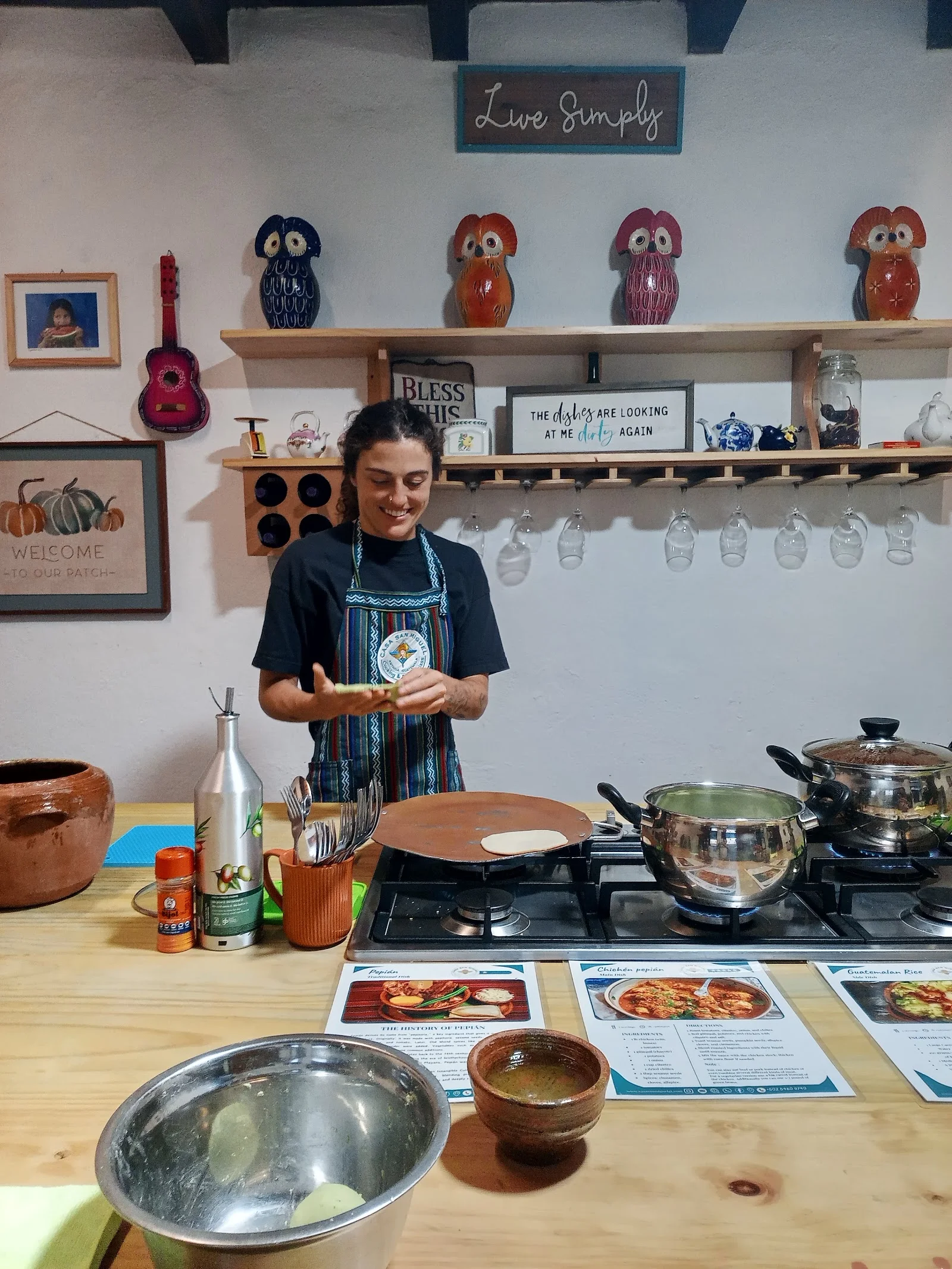
A guest learning how to hand-pat fresh nixtamalized corn tortillas over the kitchen counter at Casa San Miguel in Antigua Guatemala.
Guatemalan Corn Tortilla Ingredients & Utensils
A true Guatemalan tortilla recipe requires only nixtamalized corn and warm water. Below are the verified quantities used by our culinary team for 12 traditional tortillas:
Ingredients (Yields 12 Tortillas)
- Option A — Fresh Milled Nixtamal Dough: 500 g (1.1 lbs) fresh white, yellow, or black nixtamal masa, plus 2 to 4 tablespoons warm water to soften.
- Option B — Home Kitchen Method (Masa Harina): 2 cups (230 g) fine nixtamalized corn flour (never raw cornmeal), 1 ½ to 1 ¾ cups warm water (40°C / 105°F), and ¼ teaspoon fine salt (optional).
Traditional Utensils & Home Alternatives
- The Griddle (Comal): Traditionally baked dry (no oil) on an earthenware clay griddle (comal de barro) cured with limewater (agua de cal). At home, a flat cast-iron comal or carbon-steel skillet works seamlessly. (See our Guatemalan Clay Comal Guide for earthenware care.)
- Bowl of Water (Guacal): Kept beside your counter to lightly moisten your palms between tortillas.
- Woven Basket & Cloth (Tortillero y Tzute): A clean cotton towel or woven tzute cloth inside a basket to trap steam and keep cooked tortillas soft.
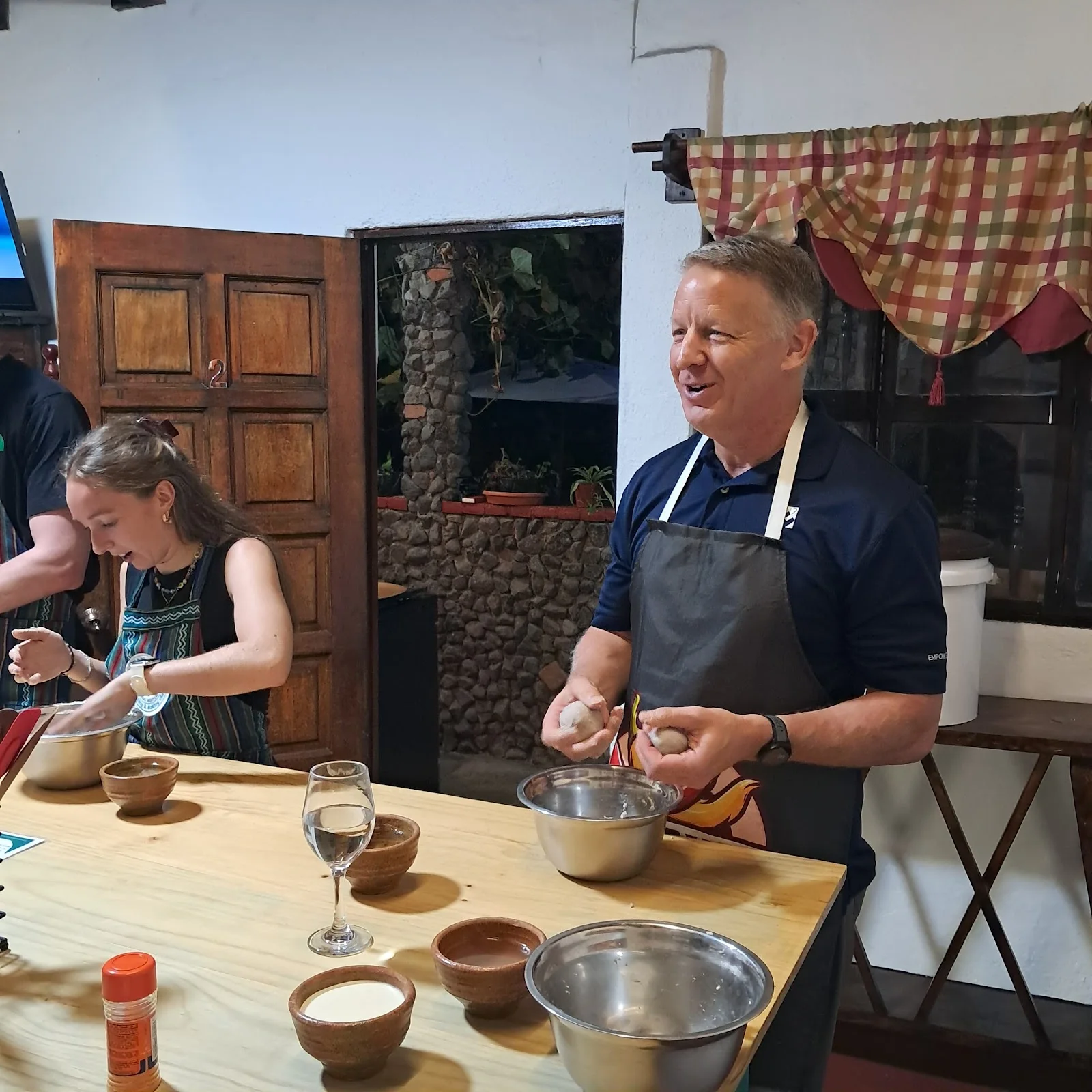
Fresh nixtamalized corn masa and kitchen prep station during a hands-on cooking class at Casa San Miguel.
Step-by-Step Guide: How Guatemalan Tortillas Are Made
Step 1: Knead and Rest the Masa
Combine masa harina and 1 ½ cups warm water in a wide bowl. Knead vigorously with the heel of your hand for 3 to 4 minutes until smooth and pliable like soft clay. Cover with a damp towel and rest for 10 to 15 minutes to hydrate evenly.
Step 2: Thumb Hydration Test & Portioning
Roll a golf-ball-sized piece of dough (45–50 g) and press your thumb gently into the center. If the rim cracks deeply, knead in 1 to 2 tablespoons warm water; if it sticks to your skin, knead in 1 tablespoon dry masa harina. Divide into 12 balls and keep covered.
Step 3: Hand-Patting Technique (Palmear)
Touch your fingertips lightly to the water bowl and shake off excess drops—palms should be barely damp. Flatten one dough ball between the base of your thumbs, then clap rapidly from palm to palm at a slight angle so the disk rotates a quarter-turn with every clap. Press gently near the rim with the base of your fingers until you form an even circle 4.5 inches (11–12 cm) wide and 3–4 mm thick. (Beginners can also pat the ball on a circle of thick freezer-bag plastic before finishing between both palms.)
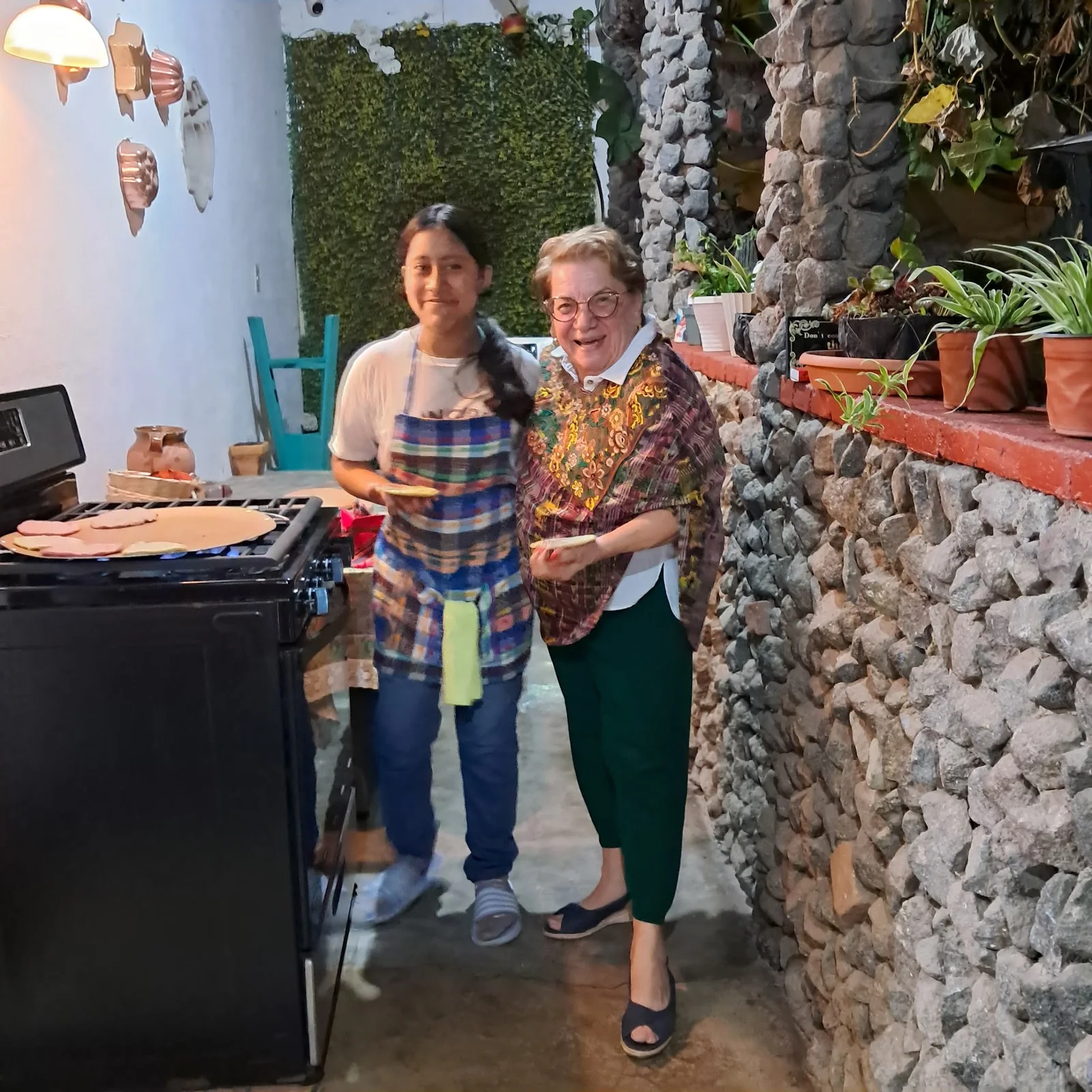
Chef Carlos guiding a traveler through traditional Guatemalan stove techniques inside the Casa San Miguel studio.
Step 4: The Three-Flip Cooking Rule on the Hot Comal
Preheat your dry clay comal or cast-iron skillet over medium-high heat for 8 minutes (215°C–230°C / 420°F–450°F). Lay the tortilla flat off your open palm:
- First Flip (Set the Seal — 30–45 seconds): Flip as soon as the edges look matte and release cleanly. Sealing early traps internal moisture.
- Second Flip (Bake Underside — 60–90 seconds): Cook until golden-brown freckles appear underneath.
- Third Flip & Puff (La Pancita — 30–45 seconds): Flip back and press the center gently with a folded towel or fingertips so internal steam inflates the tortilla like a small pillow.
Step 5: Steam-Rest in the Tortillero
Wrap each cooked tortilla immediately inside your cloth-lined basket. Resting in gentle steam for 3 to 5 minutes softens the crust and creates the signature tender chew.
Practical Tips for Storing, Reheating & Serving
- How to Serve Like a Local: In Guatemala, tortillas are brought to the table stacked inside a woven basket wrapped in a colorful handwoven tzute cloth. Tear off a warm piece and fold it into a small scoop (cucharita) to pick up thick stews, black beans, or avocado.
- Storing Leftovers: Let leftover tortillas cool completely so condensation does not make them soggy, then wrap them in a clean dry cotton cloth inside an airtight container in the refrigerator for up to 4 days.
- Reheating on the Comal: Sprinkle a few drops of water over both sides of a chilled tortilla and warm it on a dry hot skillet or comal for 30 seconds per side until soft and fragrant again—or toast it longer over low heat until crisp to make traditional Guatemalan tostadas topped with guacamole, black beans, or tomato salsa.
Common Mistakes & Practical Troubleshooting
| Problem | Cause | Quick Fix |
|---|---|---|
| Edges crack while clapping | Masa is too dry or unrested. | Knead in warm water 1 tbsp at a time and rest 10 minutes covered. |
| Dough sticks to palms | Hands are dripping wet or dough is over-hydrated. | Use only a faint sheen of moisture on palms; knead in 1 tbsp dry masa harina. |
| Tortilla turns out stiff | Comal is too cool, baking out moisture slowly. | Raise heat to medium-high so each tortilla cooks in 2 to 2.5 minutes total. |
| Tortilla won’t puff up | First side cooked too long and cracked. | Flip the first side after 30–45 seconds as soon as the edges release. |
Practice Hand-Patting Tortillas with Local Chefs in Antigua
Want to feel the exact texture of fresh nixtamalized masa in your hands? In every cooking class at Casa San Miguel, our instructors guide you step by step as you hand-pat warm corn tortillas alongside your freshly cooked Guatemalan stews.
Explore Cooking Classes ($40–$70 USD) Book Your Spot via WhatsApp
Make tortillas as part of a wider Guatemalan food experience
Hand-patted tortillas are one of the clearest ways to understand traditional Guatemalan food: the flavor comes from maize, water, heat and the technique passed from one generation to the next. The shape and texture also change by region, family and the type of comal used.
Travelers who want to practice the method can join our cooking classes in Antigua Guatemala, or visit the Antigua Guatemala market with a local chef to learn how cooks choose maize, herbs and other ingredients before preparing a meal. Confirm the current class menu and availability before booking.

Join the discussion 2 Comments