


Walk through any village or colonial street in Antigua Guatemala at midday, and you will hear a hypnotic, rhythmic percussion echoing from open kitchen doorways: clap… clap… clap… clap. This is the sacred sound of Guatemalan women hand-patting fresh corn tortillas, transforming humble balls of nixtamalized corn dough into steaming, puffed discs of pure nourishment on wood-fired clay comales.
Unlike machine-pressed or metal-extruded store tortillas, authentic hand-patted tortillas (tortillas hechas a mano) possess a tender pillowy center, delicate elasticity, and an intoxicating roasted aroma that has sustained Mesoamerican civilization for over four millennia.
For complete kitchen measurements and a troubleshooting guide for home cooking, see our full step-by-step recipe: how to make Guatemalan corn tortillas at home.
Para una perspectiva cultural profunda en inglés, consulta nuestro ensayo sobre Guatemalan food culture and ancestral maize, o la guía enciclopédica de traditional Guatemalan food dishes.
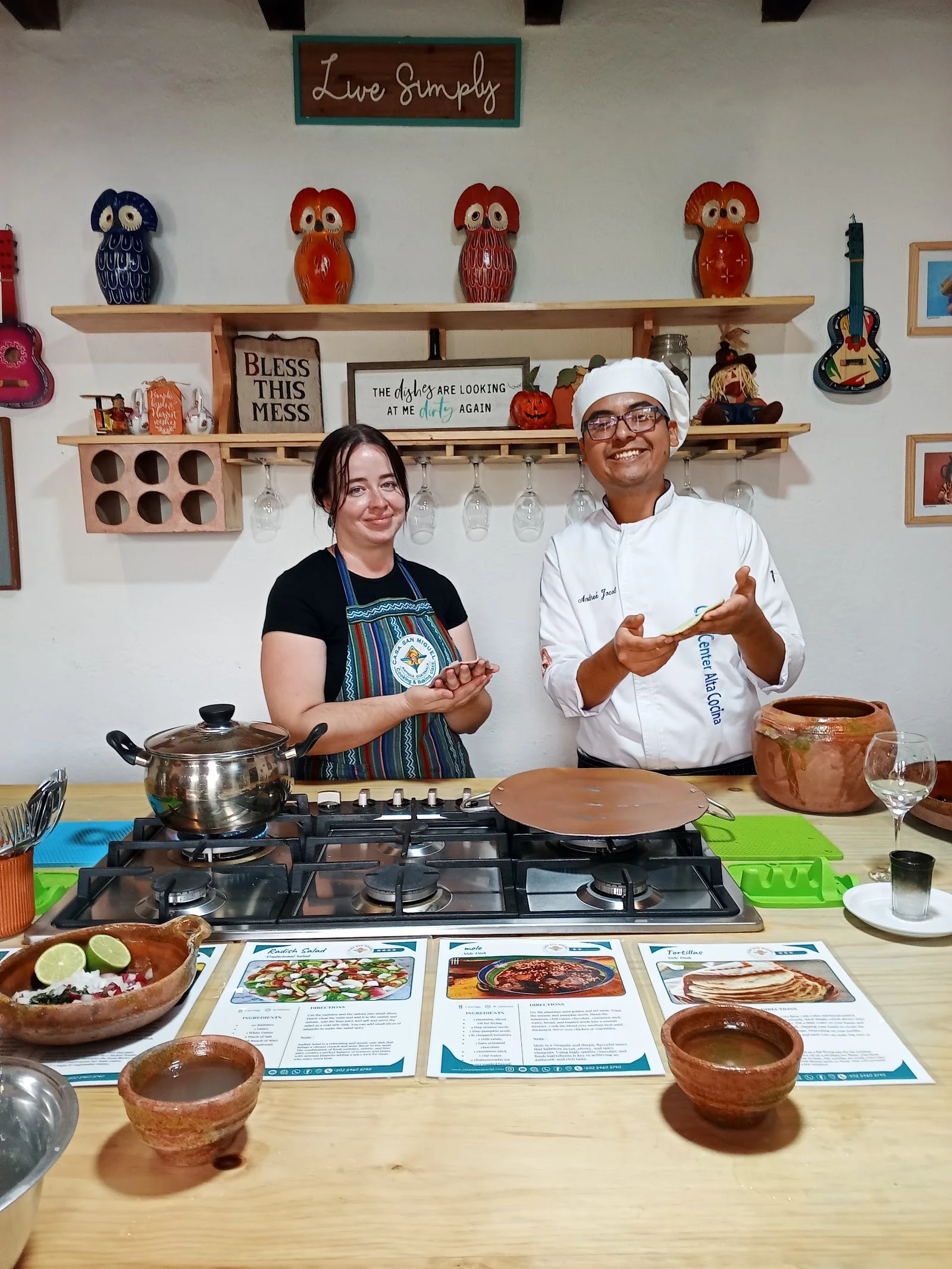
Local chef teaching the delicate art of hand-patting corn tortillas at Casa San Miguel Cooking Class.
The Three Essentials: Masa, Hydration, and Hand Rhythm
Mastering the hand-patting technique requires understanding three fundamental physical principles:
- The Moisture Balance: Nixtamal masa must feel supple and silky, like soft earlobe tissue or playdough. If too dry, the edges will crack like dry desert mud; if too wet, it clings stubbornly to your palms.
- The Water Seal on Palms: Before touching each dough ball, lightly moisten the palms of your hands with a bowl of clean water. This thin barrier prevents sticking and lubricates the circular rotation.
- The Rhythmic Clapping (Palmeo): The motion is not a violent smash, but a cupped rhythmic clap where one hand remains stationary while the other gently cups and rotates the disc 45 degrees with every tap.
Step-by-Step Hand-Patting Technique
- Form the Dough Ball (Testal): Pinch off a golf-ball-sized piece of fresh masa (about 40-45 grams). Roll it between your palms until you have a smooth, crack-free sphere.
- Flatten into a Thick Disc: Place the ball between your palms and gently press down to create a thick patty approximately 3 inches wide.
- The Circular Rotation: With your hands held in a soft V-shape, gently pat the disc back and forth from left hand to right hand. With each rhythmic tap, your fingers subtly rotate the dough clockwise, stretching the edges outward while maintaining an even center.
- The Release onto the Clay Comal: Once your tortilla reaches 5 to 6 inches across with uniform thickness, lay it smoothly onto the hot comal in a single fluid roll from fingertips to wrist without folding.
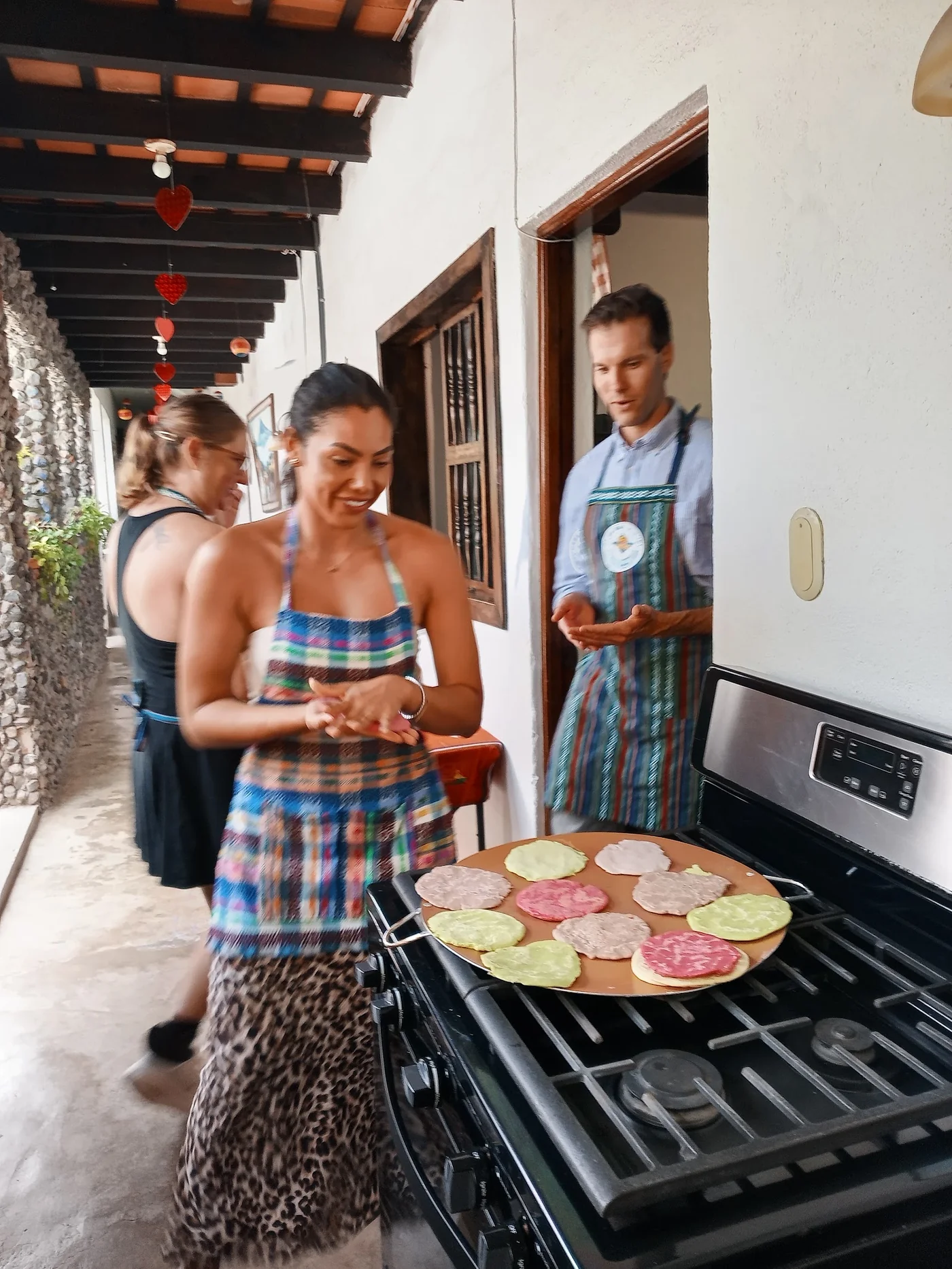
Palmeando tortillas de maíz al comal de barro tradicional.
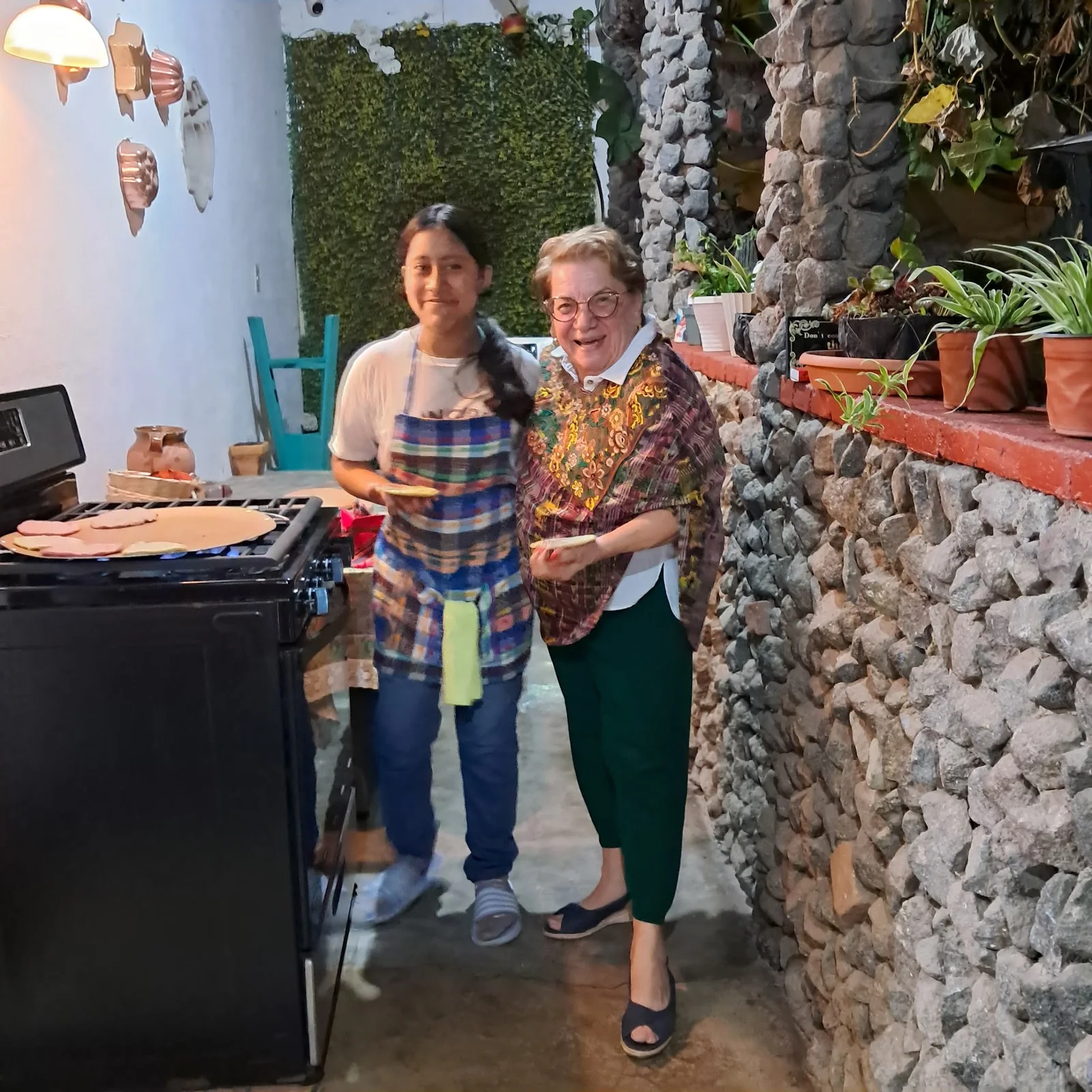
Freshly puffed hand-made tortillas ready to accompany Guatemalan stews.
Mastering the Clay Comal: The 3-Flip Rule & The Golden Puff
A traditional clay comal distributes soft, radiant heat that cannot be duplicated by cast iron or non-stick pans. Cooking a perfect tortilla requires strict adherence to the Three-Flip Rule:
- First Side (30–40 seconds): Cook until the edges lift slightly from the comal and the underside forms a translucent seal. Flip immediately.
- Second Side (60–75 seconds): Allow this side to cook thoroughly, developing light golden-brown toasted freckles (pecas).
- The Final Flip & Puff (La Inflada): Flip back to the first side and press gently on the center with your fingertips or a clean kitchen cloth. Watch with pure delight as steam expands internally, blowing the tortilla up like a little balloon. This separation of inner layers proves culinary mastery!
Hand-Pat Your Own Fresh Tortillas at Casa San Miguel
Every single cooking class at Casa San Miguel in Antigua Guatemala includes hands-on tortilla making on an authentic wood-fired clay comal. Feel the warm dough, hear the clap, and taste the difference.
- Student Class (3 Dishes — $40 USD): 2-hour hands-on session including clay comal tortillas, appetizer, and dessert.
- Master Class (5 Dishes — $55 USD): 3.5-hour complete culinary immersion featuring authentic Chicken Pepián.
- Heaven Class (7 Dishes — $70 USD): The ultimate 4.5-hour 7-dish Mayan feast.
- Optional Market Tour (+ US$20): Walk through Antigua’s colorful central market with our native chef.
Book Your Hands-On Class via WhatsApp (+502 3592 3326)
Daily Sessions: 10:00 AM & 3:00 PM (Monday–Sunday)
Frequently Asked Questions About Hand-Patting Tortillas
Why do my tortillas crack around the edges?
Cracked edges indicate dehydrated masa. Knead a couple of tablespoons of warm water into your dough until it feels smooth and elastic before patting.
Can I use a wooden tortilla press instead?
While tortilla presses are widely used in Mexico, authentic Guatemalan tradition relies exclusively on hand-patting. Hand-patted tortillas retain more air pockets, yielding a noticeably fluffier and tender crumb.
Which Casa San Miguel class covers tortilla making?
All our cooking experiences feature hands-on comal tortilla making: the Student Class ($40 USD), Master Class ($55 USD), and Heaven Class ($70 USD).
Connect the clay comal with Guatemala’s wider food culture
A clay comal is more than a cooking surface: it helps explain why maize, roasted seeds and toasted chiles are so central to traditional Guatemalan food. Heat control and timing shape the flavor of tortillas, recados and many family recipes.
Travelers can see these ingredients at the Antigua Guatemala market and practice the technique in our hands-on cooking classes. Ask about the current menu and ingredient availability before reserving.

Join the discussion One Comment