


Dining at courtyard restaurants in Antigua Guatemala is a pleasure, yet menu service only shows you the finished plate. The most memorable food experiences in Antigua Guatemala happen before a dish ever reaches a dining room: inside the labyrinthine aisles of the central market, over the dry heat of a seasoned clay comal, around wood-fired ovens in neighboring villages, and on small-scale coffee plots covering the lower slopes of Agua Volcano.
Guatemalan gastronomy is built on a five-century dialogue between Indigenous Maya agriculture and Spanish colonial pantry traditions. In 2007, Guatemala’s Ministry of Culture and Sports (Ministerio de Cultura y Deportes) formally declared iconic ceremonial dishes—including Pepián, Jocón, Kaq’ik, and Plátanos en Mole—Intangible Cultural Heritage of the Nation. Experiencing this culinary heritage firsthand means stepping beyond passive restaurant dining and engaging with the ingredients, people, and techniques that sustain daily life in the Sacatepéquez valley.
Why Antigua’s Best Culinary Moments Happen Beyond Restaurant Menus
In a conventional restaurant kitchen, the most fascinating stages of Guatemalan cooking happen behind closed doors hours before you sit down. You rarely see the dry-roasting of pumpkin seeds (pepitoria), sesame, and dried guaque and pasa chilies on an earthenware griddle, nor do you hear the rhythmic clapping of hands shaping fresh nixtamalized corn dough into warm tortillas.
When you trade a standard reservation for an interactive food activity—whether walking the market stalls with a local cook, tasting ancestral stews from clay pots, or joining a participatory kitchen session—you gain context that transforms every meal for the rest of your trip in Guatemala. You learn to distinguish mild chile pimiento from smoky chile cobanero, recognize why tomatillos (miltomates) give green sauces their bright acidity, and appreciate the labor behind every tortilla basket placed on a table.
Explore our curated itinerary of things to do in Antigua Guatemala for food lovers, or discover our dedicated family cooking classes in Antigua Guatemala for visitors with kids.
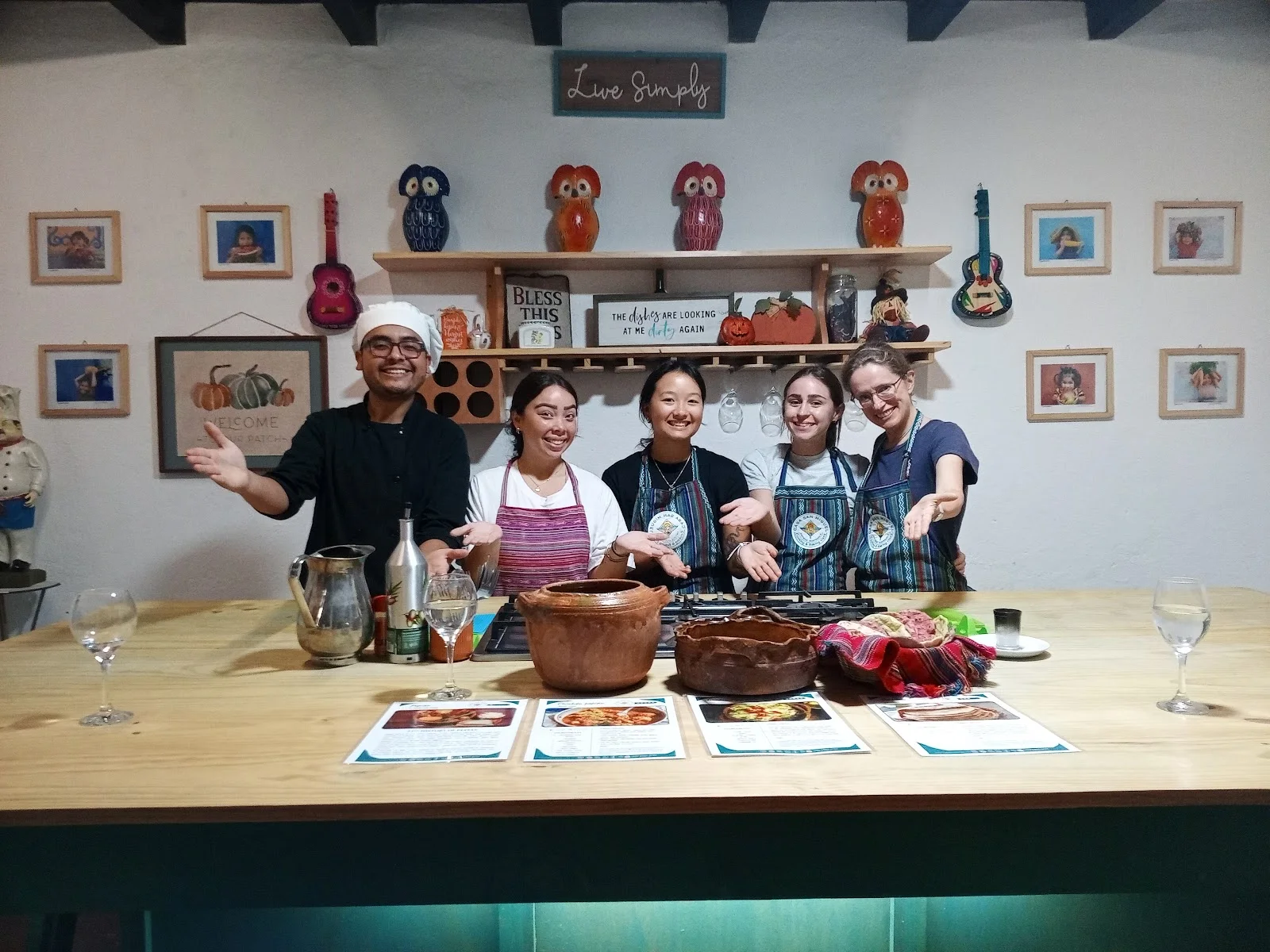
Chef Carlos and international travelers presenting traditional clay pots of Chicken Pepián, rice, and handmade tortillas at Casa San Miguel in Antigua Guatemala.
1. Exploring the Municipal Market (Mercado Central de Antigua)
Located a few blocks west of the Parque Central along 4a Calle Poniente, Antigua’s municipal market is the agricultural heartbeat of the region. Farmers from surrounding highland communities—such as Santa María de Jesús, San Antonio Aguas Calientes, and Alotenango—arrive at dawn carrying volcanic-soil produce harvested the previous afternoon.
Native Ingredients Worth Seeking Out
- Dried Chilies and Seeds: Look for woven baskets mounded with dark, wrinkled chile pasa, leathery chile guaque, and hulled green squash seeds (pepitoria)—the foundational trio that thickens and flavors traditional Guatemalan Pepián.
- Highland Vegetables and Herbs: Stalls overflow with güisquil (chayote squash), miniature husked miltomates, fresh bunches of hierbabuena (spearmint), culantro, and purple-streaked heirloom beans.
- Tropical Highland Fruits: Depending on the season, you can sample creamy orange zapote, jocotes, sweet granadillas (passion fruit), pitahaya, and tree-ripened plantains used for sweet desserts.
Because the market has no formal signage and spans dozens of indoor and outdoor corridors, many visitors prefer exploring it on an Antigua Guatemala market tour with a local chef, where you can ask questions directly to vendors and select ingredients you will cook with later that day.

Fresh highland vegetables, squash, and seasonal produce at the traditional market in Antigua Guatemala.
2. The Ritual of Ancestral Recados and Clay-Pot Cooking
If there is one culinary concept every traveler should understand in Guatemala, it is the recado. Unlike a thin broth, a recado is a deeply aromatic, velvety sauce built by charring vegetables (tomatoes, onions, garlic, tomatillos, and chilies) directly over a dry clay or cast-iron griddle until their skins blister and blacken. Those roasted aromatics are then ground or blended with toasted seeds and simmered slowly in earthenware pots (ollas de barro).
- Pepián de Pollo o Res: Originating in the Kaqchikel Maya highlands, Pepián combines smoky charred tomatoes, guaque and pasa chilies, toasted sesame, pumpkin seeds, cinnamon, and allspice with chicken or beef and tender chunks of potato, carrot, and güisquil.
- Jocón de Pollo: A vibrant green stew whose color and bright, herbal tang come entirely from fresh cilantro, green scallions, miltomate, and green bell pepper thickened with toasted sesame and corn masa.
- Subanik and Kaq’ik: Ceremonial dishes prepared for festivals and family milestones—Subanik steamed inside bound mashán leaves, and Kaq’ik simmered as a spiced turkey broth infused with chile cobanero and mint.
3. Nixtamalized Corn and the Art of Hand-Patting Tortillas
In Maya cosmology, recorded in the Popol Vuh, humankind was fashioned from white and yellow corn dough. Today, corn remains the anchor of every Guatemalan meal. Unlike thin, machine-pressed tortillas common elsewhere, traditional highland tortillas in Antigua are smaller, thicker, and shaped entirely by hand (palmeadas a mano) without a mechanical press.
Dried corn kernels are simmered with slaked lime (calcium hydroxide) in the ancient process of nixtamalización, washed, and ground at neighborhood mills (molinos de nixtamal) into moist, fragrant masa. Learning how to hand-pat traditional corn tortillas—and watching them puff on a hot clay comal—is one of the most tactile cultural skills you can practice during your stay.
4. Hands-On Cooking Workshops in a Local Family Kitchen
For travelers who want to move from observer to participant, taking one of the best cooking classes in Antigua Guatemala offers the most complete cultural immersion. Rather than watching a demonstration from a distance, you work at your own station, toasting spices, preparing recados in clay cookware, and shaping tortillas alongside local instructors.
At Casa San Miguel Cooking & Baking Class, located in the peaceful colonial village of Plazuela San Gaspar Vivar on the southern edge of Antigua, the experience is rooted in family heritage—inspired by the founder’s father, who ran an artisanal bakery in Zacapa. Guests are welcomed with natural fruit drinks, potable water, and Guatemalan coffee before stepping into a sheltered, wood-beamed colonial kitchen to cook a complete multi-course meal from scratch.
Choosing a Workshop Format That Fits Your Itinerary
- Student Class (3 Dishes — $40 USD): Designed for beginners or travelers on a tighter schedule (approximately 2 to 2.5 hours), covering a traditional appetizer, a main course such as Chicken Pepián or Jocón, and a classic dessert like Rellenitos de Plátano.
- Master Class (5 Dishes — $55 USD): A deeper culinary workshop where you prepare five traditional dishes from start to finish, including fresh corn tortillas, salad, rice, a heritage main stew, and traditional sweets.
- Heaven Class (7 Dishes — $70 USD): A comprehensive feast covering seven iconic recipes across appetizers, main courses, sides, and traditional desserts such as Tamalitos de Elote and Rellenitos de Plátano.
- Optional Guided Market Tour (+$20 USD): Available as an add-on before your cooking session to explore Antigua’s market stalls and handpick fresh produce with your instructor.
Every session at Casa San Miguel includes local transportation, all ingredients and kitchen equipment, printed recipe cards to take home, and a shared sit-down meal to enjoy everything you have prepared. Vegetarian and plant-based adaptations are also available for travelers seeking vegetarian and vegan Guatemalan cooking classes in Antigua.
5. Evening Street Food Plazas, Artisanal Sweets, and Coffee Culture
Beyond markets and cooking schools, Antigua’s daily food rhythm shifts with the hours of the day:
- Late-Afternoon Antojitos at Plaza La Merced: As dusk settles over the yellow baroque facade of La Merced Church, local families gather around food stalls serving crisp corn tostadas topped with guacamole, black bean purée, or red tomato salsa, alongside warm dobladas, chuchitos, and spiced atol de elote (sweet corn drink). If you want to learn how to prepare these snacks safely from scratch, you can also explore a dedicated Guatemalan street food cooking class in Antigua.
- Conventual Sweets (Dulces Típicos): Since the 16th and 17th centuries, Antigua’s convents blended Spanish sugar-work with local squash seeds, milk, guava, and tamarind. Traditional candy shops around the market and historic streets display glass jars of canillitas de leche, colochos de guayaba, and toasted pumpkin-seed brittle (pepitoria).
- Volcanic-Soil Coffee and Cacao Traditions: Surrounded by three volcanoes that replenish the valley with mineral-rich pumice soil, Antigua is one of the eight official coffee regions recognized by ANACAFÉ. Pairing a morning coffee farm walk or cacao tasting with an afternoon cooking workshop gives you a full-circle view of Guatemala’s agricultural exports and home-kitchen staples.
Practical Tips for Planning Your Culinary Itinerary in Antigua
- Schedule Market Visits in the Morning: Produce is freshest and vendor activity is liveliest between 8:00 AM and 11:00 AM.
- Book Hands-On Workshops in Advance: Small-group kitchens customize ingredient quantities per guest. Casa San Miguel runs daily sessions at 10:30 AM, 12:30 PM, and 4:30 PM (advance booking required).
- Communicate Dietary Preferences Early: Because traditional recados are naturally thickened with seeds and corn masa rather than wheat flour or dairy cream, Guatemalan dishes adapt seamlessly to gluten-free, dairy-free, and plant-based diets when your chef knows in advance.
Frequently Asked Questions About Food Experiences in Antigua Guatemala
What is the most traditional dish to try or cook in Antigua Guatemala?
Pepián (usually prepared with chicken) and Jocón (a green tomatillo and cilantro stew) are the two signature dishes of the Antigua and Sacatepéquez region. Both are officially recognized as Intangible Cultural Heritage of Guatemala and are served with handmade corn tortillas and rice.
Is it safe for international travelers to eat market and street food in Antigua?
Yes, provided you follow sensible precautions: choose busy stalls with high turnover where food is cooked fresh over high heat, or join a guided cooking class where all produce is washed in purified potable water and prepared in a hygienic kitchen.
Do I need prior cooking experience to join a Guatemalan cooking workshop?
No prior experience is required. Local chefs guide you step by step—from roasting spices and balancing recado sauces to patting tortillas by hand—making the experience welcoming for complete beginners as well as avid home cooks.
Cook Authentic Guatemalan Recipes at Casa San Miguel
Step into our family kitchen in Plazuela San Gaspar Vivar, Antigua Guatemala, for a hands-on culinary experience that includes transportation, fresh fruit drinks, potable water, authentic Guatemalan coffee, printed recipes to take home, and a shared meal.
- Student Class (3 Dishes — $40 USD): Ideal 2.5-hour introduction covering appetizer, main course, and dessert.
- Master Class (5 Dishes — $55 USD): Complete hands-on workshop preparing five traditional recipes from scratch.
- Heaven Class (7 Dishes — $70 USD): Our full seven-dish culinary immersion from appetizers to traditional sweets.
- Optional Market Tour (+$20 USD): Visit Antigua’s market with our chef to handpick fresh local ingredients.
Reserve Your Class via WhatsApp (+502 3592 3326)
Or visit our Contact Page | Daily Shifts: 10:30 AM, 12:30 PM & 4:30 PM

Join the discussion One Comment